Trending

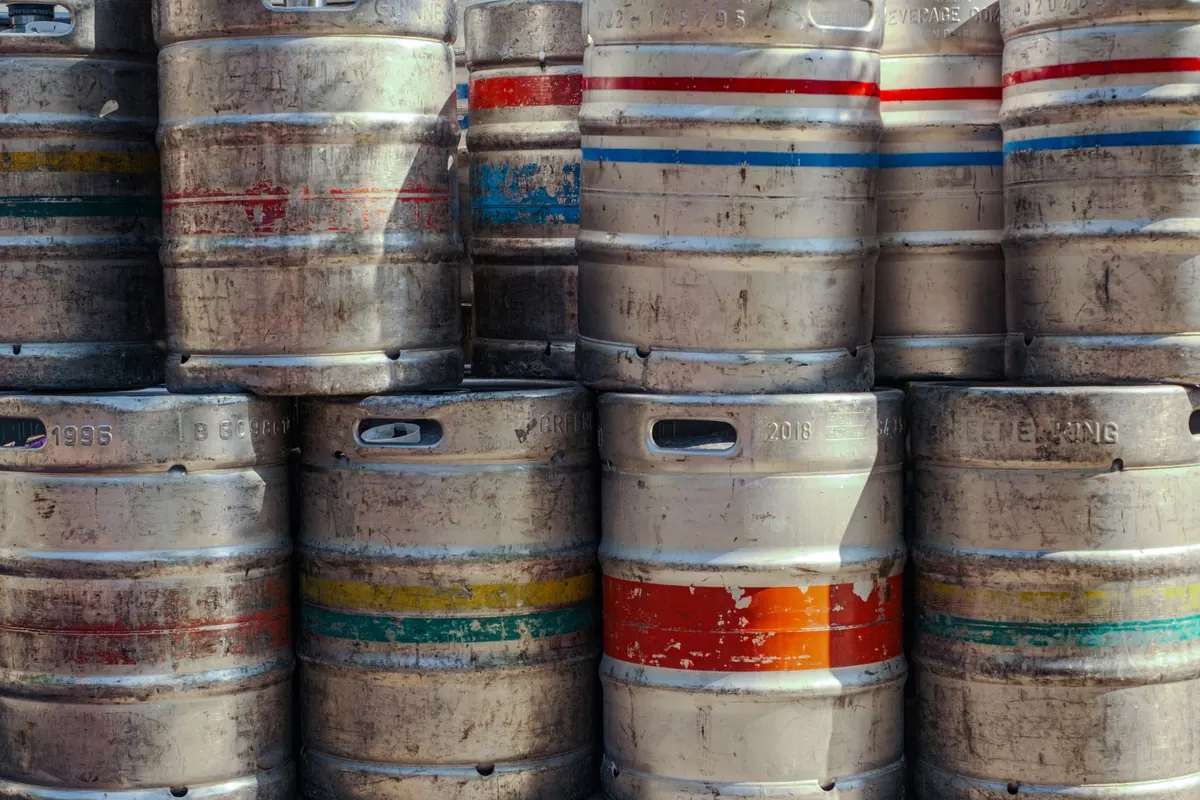
A keg at home sounds like the easiest party decision you'll make all week — until a courier hands you a steel drum, asks about a deposit slip, and you realize you have no idea how the beer gets from that drum into a glass. Draft delivery has become genuinely simple in most cities: order online, choose a window, and cold beer arrives at the door. The gap between "keg ordered" and "beer poured" is where first-timers stumble.
Here's what actually matters: the size you order, the paperwork attached to it, the equipment that fits your space, and the small habits that separate a clean pour from a glass of foam.
Start with volume, then work backward to whatever you can keep cold. A keg that doesn't fit your fridge or cooler is a problem no amount of ice will fix.
The estimate that matters is pours, not headcount. Not everyone drinks beer, and not everyone drinks the same amount. Assume beer drinkers will have two or three glasses across an evening, then trim that if wine or cocktails are also on offer. If the keg doesn't kick, you need somewhere to keep it cold and carbonated until it does — which is the real argument for ordering one size smaller than your ego suggests.
Most shops charge a refundable deposit on the keg shell, and often a second deposit on the coupler if you're renting the tap gear. Amounts vary by shop, and in some places deposits are set by state law, so treat any number you hear as local rather than universal. Ask two questions before you pay: how much comes back, and what has to come back with it.
Two more things worth knowing. Alcohol delivery rules differ by state and locality, and the courier will almost certainly require an adult signature with valid ID at drop-off — someone 21 or older needs to be home. Check your local rules rather than assuming, and if you're unsure how a deposit dispute would be handled, ask the shop in writing before ordering.
A keg coupler is the fitting that locks onto the keg's valve, and they are not universal. Standard American kegs use a Sankey D coupler. Many imported European beers use A, S, or G types instead. Tell the shop what system you already own, or buy the coupler that matches the beer you ordered — a mismatched coupler means a keg you cannot tap.
Two options, very different results. A hand pump (party pump) pushes beer with ordinary air. It's cheap and works fine for a single evening, but the beer begins oxidizing almost immediately and is usually best within a day or so. A CO2 tank with a regulator keeps the beer properly carbonated and fresh for several weeks, which is why it's the standard for anything beyond one party. A five-pound tank suits most home setups.
A kegerator holds the keg and the CO2 inside one refrigerated box. A jockey box chills the beer as it flows through a coil packed in ice — handy for outdoor events and garages. Nitro-style beers need a nitrogen blend and a stout faucet with a restrictor plate, so confirm that before ordering.
Chill the keg for at least 24 hours before serving; warm beer foams no matter how good your technique is. Aim for roughly 38°F. Then set the CO2 regulator around 10 to 12 psi as a starting point for typical ales at that temperature, and adjust from there. Highly carbonated styles, wheat beers, and Belgian ales often want a bit more.
Line length is the setting most home setups get wrong. Beer needs resistance between the keg and the faucet to arrive calm. Most setups use 3/16-inch inside-diameter line, and around five or six feet is a common starting point; shorter runs pour fast and foamy.
The pour itself: use a clean, cold glass with no soap film on it — detergent residue kills the head. Hold the glass at about 45 degrees, open the faucet fully in one motion, let the beer run down the side, then straighten the glass and close the tap. A slightly foamy first pour after delivery is normal. Let the keg sit for a couple of hours after it arrives, since it was just bounced around in a vehicle.
Couriers typically bring the keg to your door, not your basement. If it's going downstairs, have a plan and a second person. Clear the spot beforehand — cooler, kegerator, or a tub with ice — so the keg isn't sitting in the sun while you rearrange the garage. Order several days ahead for weekends and holidays, and give the driver a phone number that someone will actually answer.
Handle those five things and draft delivery stops being a gamble. The beer shows up cold, the deposit comes back, and the only thing left to think about is who's pouring the next round.
Photo: Oliver King / Pexels